
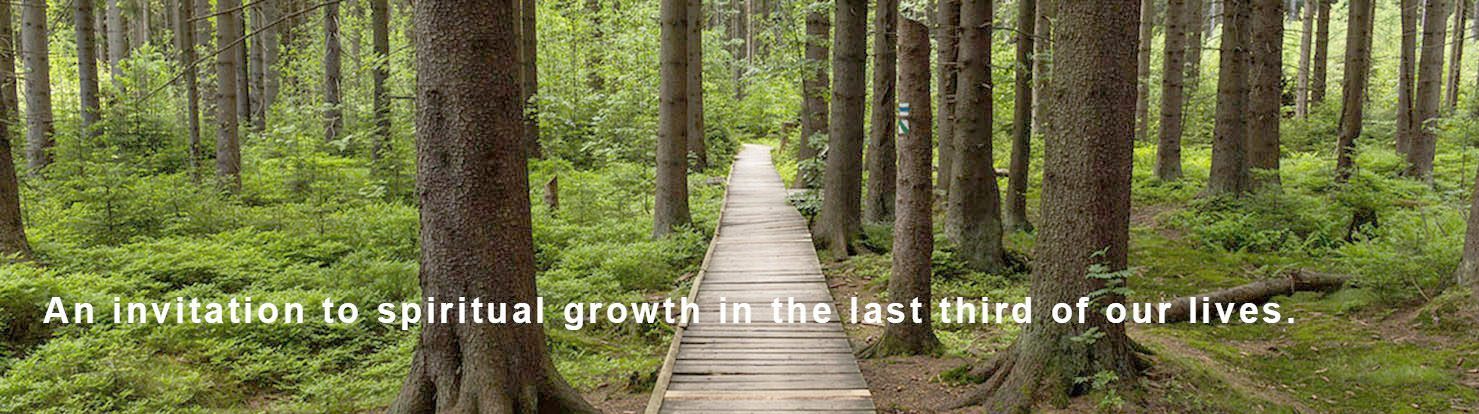

Living our most authentic spirituality in the second half of life.
This fall, the Wisdom Years will take on our most profound study of spirituality yet as we explore in depth Richard Rohr’s classic work, Falling Upward. In Falling Upward, Rohr explains that there are two tasks in human life. The first task is to build a strong “container” or identity; the second is to find the contents that the container was meant to hold.
In the first half of life we are concerned with surviving successfully. But at a certain life-stage we begin to long for more – a deepening spirituality that seeks to know what our personal “container” was truly meant to hold. The second half of life is a further journey, a deeper journey, in which we find that the failings of the first half of our lives are actually the foundation for the second half.

Starting September 4, we will divide the 13 chapters plus introduction of Falling Upward into two seven-week sessions.
Sept. 4 to Oct. 16 and Oct. 30 to Dec. 18. (No sessions on Oct. 23 or Nov. 27.)
We will each read Falling Upward on our own, then gather weekly on Thursdays at 4 p.m. (Central time) by Zoom for gentle but fruitful conversations.
If you would like to join the Wisdom Years community for this dynamic study using Falling Upward, send an email to Marjorie George at marjoriegeorge62@gmail.com.
There is no charge for this course, but you will need to provide your own book. (Note that Falling Upward was first published in 2011 then revised in 2023. You may use either edition for this course.) Purchase the book at St. Mark’s Bookstore (https://www.stmarksbookstore.com/) through their bookshop link (https://bookshop.org/shop/stmarksbookstoresa) or from your favorite book retailer.
Never let the cost of the book keep you from joining us. Scholarship funds are available.
Questions? Email to marjoriegeorge62@gmail.com.
Richard Rohr is the founder of the Center for Action and Contemplation which is dedicated to offering Christian contemplative wisdom through teachings, practices, and community engagement. The goal of CAC is to help people live out this wisdom in practical ways—so that they become instruments of love, peacemaking, and positive change in the world.
 The Wisdom Years