Gathered Wisdom, Sept 1

A weekly collection of inspiration and resources for the journey, gathered from websites, books, and pass-alongs that have been shared with us. From Spirituality in the Wisdom Years.

Register Now for our online workshop/retreat:
Pilgrims Traveling Together in the Last Third of Life

September 18, 10 am to 4 pm

Two live teaching and sharing sessions
– 10 am to noon and 2 to 4 pm –
will be separated by a long break for individual reflection and response offline.

Our day will be constructed around prayer, teaching and sharing sessions, Q and A time, and small-group discussion. This is a day of coming together in community to share the blessings and challenges of being an older adult.

For details and to register

Diving into the Deep

The religious searcher should be a diver through the deeps of ancient wisdom, seeking to bring up to the surface those concepts that can illuminate life today. Not all truth will be discovered in what is to come; some must be recalled from what has been forgotten. 

— David J. Wolpe in In Speech and In Silence: The Jewish Quest for God by David J. Wolpe

FROM Spirituality and Practice 

This Week

Sharing Wisdom

by the Rev. Ripp Hardaway

The Rev. Ripp Hardaway, rector of St. John’s Episcopal Church in New Braunfels, Texas, has some advice for us: Never test the depth of the water with both feet. He learned this, he says, from a wise elder. In fact, Hardaway believes we all have a lot of wisdom to pass on to the next generation and a lot to learn from the previous one.

One of the great gifts of those who possess wisdom is their willingness to share what they have gained by years of practice.  In many cultures there is a great awareness of the need to seek that personal connection seamlessly or organically.  Today we hire coaches, teachers, tutors and the like, and too often our wisdom is limited to those who can afford it.  I am not certain that this is working;  I am quite sure that it is costing us as a society when wisdom is not passed from one generation to another.

Read the entire essay.

FROM: This article was originally published in the magazine Moxie, winter/spring 2015 edition. Moxie is no longer in print. Thanks to Julie Chalk for sharing it. 

Hope in God

by Br David Vryhof, SSJE

Remember Corrie ten Boom and her book The Hiding Place? We all read it in the 1970’s. Brother David recalls her words just now as we struggle to navigate the challenges we find ourselves and our country in.

We can find courage to fight on in the examples of those who have gone before us. I’ve been reflecting recently on the words and wisdom of Corrie ten Boom (1892-1983), a Dutch Christian woman who, with her father and sister, helped Jews escape the Nazis during World War II by hiding them in their home. 

Read the essay

FROM Society of St. John the Evangelist 

Mourning

by Fr. Ron Rolheiser, OMI

Our culture does not give us permission – or time – to mourn. We are encouraged to move on, pull ourselves together, and cry quietly. Ron Rolheiser, president of Oblate Seminary in San Antonio TX, says that is damaging to our souls.

We have many things to mourn in life: We are forever losing people and things. Loved ones die, relationships die, friends move away, a marriage falls apart, a love we want but can’t have obsesses us, a dream ends in disappointment, our children grow away from us, jobs are lost, and so too one day our youth and our health. Beyond these many losses that ask for our grief there’s the need to grieve the simple inadequacy of our lives, the perfect symphony and consummation that we could never have. Like Jephthah’s daughter, all of us have to mourn our unconsummation.

Read the entire essay

FROM The blog of Ron Rolheiser

An Audio Meditation for These Days of Uncertainty

By Nathan Foster

An audio med­i­ta­tion led by Nathan Fos­ter to help us set our minds on what is good, beau­ti­ful, and true in the midst of uncertainty. This meditation was recorded in March, 2020, when the pandemic was just beginning and we knew not what was ahead. Six months later, we still don’t know.  Listen to the end to discover a beautiful compline prayer from the Northumbria Community. Nathan Foster is Director of Community Life at Renovare.

Listen to the meditation.

FROM Renovare

If you have something to add to Gathered Wisdom, send it to Marjorie George at
marjoriegeorge62@gmail.com

Gathered Wisdom is from Spirituality in the Wisdom Years, a ministry that invites older adults to deepening spirituality in the last third of their lives. If someone forwarded this to you, learn more about Spirituality in the Wisdom Years and subscribe to the site at
ww.wisdomyears.org.
Gathered Wisdom, Aug 25

Register Now for our online workshop/retreat:
Pilgrims Traveling Together in the Last Third of Life

September 18, 10 am to 4 pm

Our day will be constructed around prayer, teaching sessions, Q and A time, and small-group discussion. Two live teaching sessions – 10 am to noon and 2 to 4 pm – will be separated by a long break for individual reflection and response offline. This is a day of coming together in community to share the blessings and challenges of being an older adult.

For details and to register

Patient Trust

Above all, trust in the slow work of God.

We are quite naturally impatient in everything to reach the end without delay.We should like to skip the intermediate stages.
We are impatient of being on the way to something unknown, something new.

And yet it is the law of all progress
that it is made by passing through some stages of instability—
and that it may take a very long time.

And so I think it is with you;
your ideas mature gradually—let them grow,
let them shape themselves, without undue haste.
Don’t try to force them on,
as though you could be today what time
will make of you tomorrow (that is to say, 
grace and circumstances acting on your own good will.)
Only God could say what this new spirit
gradually forming within you will be.
Give Our Lord the benefit of believing
that his hand is leading you,
and accept the anxiety of feeling yourself
in suspense and incomplete.

—Pierre Teilhard de Chardin, SJ
excerpted from Hearts on Fire

From the website of Ignatian Spirituality.com

When is Our Life Fulfilled?

by Fr. Ron Rolheiser

One of the questions of aging is “Am I finished? Have I done all I am going to do? Was it enough?” Fr. Ron Rolheiser insists that aging includes giving off our “seed” for the benefit of those who come after us.

But when [aging] is seen in the light of Jesus’ life, we see that in our fading out, like a flower long past its bloom, we begin to give off something of more value than the attractiveness of the bloom. 

Read the full essay

FROM Fr. Ron Rolheiser blog

Volunteer Opportunities in Your Area of Interest

The August 2020 edition of Sage-ing International’s newsletter is not only devoted to activism, it also offers information about dozens of social-action organizations. The list is categorized by areas of interests, such as peace, literacy, and inclusiveness.

This issue is meant to offer two gifts: It demonstrates to all of us that strong, determined people are working on every front to resolve the problems that break our hearts. It lights the path by which we can join allies in working to better our world.

We need all hands on deck to address our humanitarian and environmental crises; happily, we humans have a profound need to feel useful. We hope this list is useful in lighting a path to the activism you want to take.

Read the newsletter

FROM Sage-ing International

How Gratitude Breaks the Chains of Resentment

An excerpt from Henri Nouwen’s book Spiritual Formation suggests that ministry is about offering our own human brokenness to a world that needs a word of hope. When we minister out of our weakness, says Nouwen, we get more than we give. 

True lib­er­a­tion is free­ing peo­ple from the bonds that have pre­vent­ed them from giv­ing their gifts to oth­ers. This is true not only for indi­vid­ual peo­ple but also — par­tic­u­lar­ly — for cer­tain eth­nic, cul­tur­al, or mar­gin­al­ized groups. What does mis­sion to the Indi­ans or Boli­vians or dis­abled per­sons real­ly mean? Isn’t it fore­most to dis­cov­er with them their own deep reli­gios­i­ty, their pro­found faith in God’s active pres­ence in his­to­ry, and their under­stand­ing of the mys­tery of nature that sur­rounds them?

Read the excerpt

FROM Renovare

Unlikely Pen Pals Form a Special Bond

An idea for churches: match elders with youngsters and encourage a friendship online or with written letters. That’s what one retirement center did.

Addie Fenster, 7, and Gary Melquist, 73, both felt lonely due to the isolation caused by coronavirus. Gary’s retirement home connected him with Addie and they became pen pals. The pair swap letters and artwork, and have formed a very unlikely, but very sweet, special friendship.

Watch the video of these two new friends.

FROM Happify Daily

Way of the Monk, Path of the Artist online retreat

A 12-week companion retreat to The Artist’s Rule (in community)              
September 7 – November 28, 2020
with Christine & John Valters Paintner

Many have enjoyed the book The Artist’s Rule. Enjoy it again or for the first time in an online course.

Lots of new content including a weekly live webinar with Christine and a weekly scripture reflection from John.
For details and to register.

DROM Abbey of the Arts

If you have something to add to Gathered Wisdom, send it to Marjorie George at
marjoriegeorge62@gmail.com

Gathered Wisdom is from Spirituality in the Wisdom Years, a ministry that invites older adults to deepening spirituality in the last third of their lives. If someone forwarded this to you, learn more about Spirituality in the Wisdom Years and subscribe to the site at
ww.wisdomyears.org.
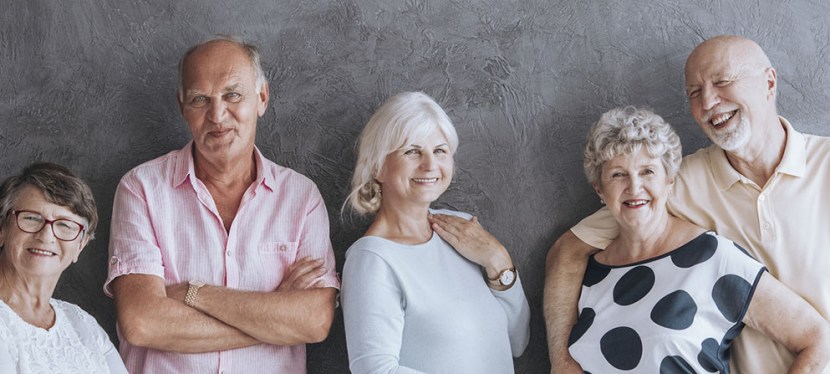
Gathered Wisdom Aug. 4

A weekly collection of inspiration and resources for the journey, gathered from websites, books, and pass-alongs that have been shared with us. From Spirituality in the Wisdom Years.

Peace comes from living a measured life. Peace comes from attending to every part of my world in a sacramental way. My relationships are not what I do when I have time left over from my work . . . Reading is not something I do when life calms down. Prayer is not something I do when I feel like it. They are all channels of hope and growth for me. They must all be given their due.

Joan Chittister in Wisdom Distilled from the Daily: Living the Rule of St. Benedict Today 

To Practice This Thought:
For one day, keep track of your activities and the approximate time you give them. What adjustments could you make to use your time more soulfully?

FROM: Spirituality and Practice

This Week:

to read or listen:

Seven Movements of the Second Half of Life

In the second half of life, says Fr. Ron Rolheiser of Oblate Seminary in San Antonio, our struggles are often very different than the first half of life. “And you can see this, biblically, in the parable of the prodigal son and the older brother. The younger son is struggling with all the things of the world – ambition, travel, lust, whatever – while the older brother is struggling much more with anger and coming to peace inside of himself. That’s a much greater struggle.” Rolheiser talks about seven movements to be adopted in the second half of life in a recent interview with Kolbe Times magazine.

FROM: Kolbe Times

Wisdom Cries Out

“How can I learn to be still? How can I make peace with a solitude I did not choose? How can I help my neighbor? How can I overcome the racism etched on my bones by my ancestors? How should we live? What does God desire? How is God involved? How can I love a God who is so mysterious? What is the Church called to become?” These are the questions we are asking today, the questions of those who hunger and thirst for wisdom, says Br. Keith Nelson of the Society of St John the Evangelist. “The signs of these times are causes and conditions calling for nothing less than the spiritual evolution of the human family: the full flowering of our capacity for Wisdom,” he says. Listen to the podcast or read the text of “The Vindication of Wisdom.” 

FROM: Society of St. John the Evangelist

e-courses
Bringing Back Elder Wisdom

In former times, our “elders” were keepers of wisdom and leaders through times of change and evolution. They held the stories that kept communities and society safe and provided touchstones for well-being and a sense of identity. True elders are soul travelers – not just chronologically, but also spiritually and intellectually: reaching back and reaching forward, reaching in and reaching out into the world and the human ecology that connects us. This online retreat from the Center for Courage and Renewal welcomes individuals seeking the opportunity for reflection and renewal as a means of illuminating their own life journey, or enhancing their leadership role in work, organizational or community settings. Learn more about the retreat

FROM: Center for Courage and Renewal 

practices

Through the Lens of Contemplation

If you enjoy reflecting on your experiences through the glimpses of life you discover by taking photos, then the Contemplative Photographers Practice Group may be for you. Now in its sixth year, this supportive community receives a theme suggestion every week, and members share photos, ideas, and inspiration with each other. Newcomers and returning members are welcome. Learn about it.

FROM: Spirituality and Practice 

Put Yourself in the Story

Ignatian contemplation, also known as Composition of Place, involves “composing the place” by imagining yourself in the story of scripture. Using our imagination, we place ourselves in the scene of the story, engaging our senses with wonder.  A post from Grow Christians does a walk-through of the Feeding of the 5,000, but this exercise is fruitful with any scripture. Engage the practice. 

FROM: Grow Christians

watch for
Black Church Documentary Coming to PBS

A two-part PBS series hosted by Henry Louis Gates Jr is scheduled to run next year and look at the deep history of the Black church and culture of African American faith communities. Gates has said that the Black Church is a “story of grace and resilience, struggle and redemption, hope and healing.”  The documentary will feature interviews with Oprah Winfrey, John Legend, Jennifer Hudson, Bishop Michael Curry, Cornel West, Pastor Shirley Caesar and the Rev. Al Sharpton. Gates is a literary critic and academic who’s become well known as the host of the popular Finding Your Roots series. Learn more.

FROM: Relevant Magazine

New in your Email

Good morning, all who follow Spirituality in the Wisdom Years. You should have received in your email inbox this morning the first edition of Gathered Wisdom, a weekly collection of articles, resources, prayers, poems, and other insights that are worth passing along.

We invite you to contribute to this effort – if you read it or watch it or hear it and think “this is really good . . .” please send it to me at marjoriegeorge62@gmail.com.

I welcome your feedback.

With prayers for the health and safety of all of us in this hard time,

Marjorie

Blessings and Burdens

The Gift of Years is a book for those of us who don’t feel old, whatever our chronological age, but who one day realize with a kind of numbing astonishment that we have not managed to elude aging. We are now called “seniors” or “elders” or “the older generation,” even “elderly” by the young ones around us, despite the fact that we feel no different now than we did a year ago.

Inside we know ourselves to be coming out of one part of life and going into another -clinging to one but unable to stop ourselves from slipping into the other. And we don’t know quite what to think about it. Is this the end of everything we know to be good and fulfilling in life?

That depends on whether or not we know what to look for as the later years come, says author Joan Chittister. The Gift of Years teaches us how to embrace the blessings of this time and navigate the burdens. It is time to understand that the last phase of life is not non-life; it is a new stage of life.

This online book study meets weekly
beginning Thursday, July 2,
4 to 5:15 p.m.
Participants will read 2 chapters each week on their own,
gather for a brief intro using Zoom software,
then break into Zoom discussion groups of 6 to 8.
The initial study runs for 6 weeks but will continue if the group wishes.

No cost for this study.

To indicate interest and learn more details, email to Marjorie George at marjoriegeorge62@gmail.com.

This online study is one of our Wisdom Circles — companions who come together around a particular topic to share the blessings and the challenges of the older-adult years. Lean more about Wisdom Circles here.

Now is the Time for Elders

by Paul Pineda

After the chaos and the incessant bombardment of twenty-four-hour news has rained upon us, it is time for us elders to assume our place in this time.  Our loved ones are frightened by the pandemic at our doorstep.

Our people need our wisdom that comes from having lived through our own personal and communal experiences.  In their song Grandpa, Tell me ‘bout the Good Old Days, the Judds ask not for hard facts but about what gave people hope.

Children are asking older siblings, and they are asking their parents.  And parents are looking to us to share of what we remember.  And what we remember was the communal fear and, most importantly, we share the communal sense of relief as our lives returned to normal in past crises.  

As silly as it may sound, the “truths” that grounded my life as a youngster were three constants: a President (Eisenhower) and a Pope (Pius XII) and a Catholic Bishop in my home town (Garriga).  These men were “in charge,” and all was right in my world.  Yet, within a span of five years (1958-1963), these markers were changed in my universe.

Our country was buffeted about by the turbulent Sixties, with its Vietnam War, and the deaths of Kennedy and King. By the end, I remember feeling wrung out by the battering winds of change.  Natural and man-made disasters have also touched our lives.

I connect the dots of my experiences like a rosary that has been my life.

Yet, I want to believe that whatever wisdom I may have as an elder is having learned by connecting the dots.  I connect the dots of my experiences like a rosary that has been my life.  I do not mean to oversimplify life, but I do know that our fear of the unknown plays a great part in how we respond to difficult news.  If I stop and remember the pieces of my life, as I am able to patch together the sameness in each of these events, I am able to see hope. 

And so, it is in times like this that our purpose as elders is to provide hope for those who may not see their own hope.  We are called upon to teach the ancient wisdom of connecting the dots as a way of saying with Julian of Norwich, “All shall be well, and all shall be well and all manner of thing shall be well.”

Paul Pineda is part of the working group that guides the Spirituality for the wisdom Years ministry. Reach Paul at episcopalnfa@gmail.com.

Placeholders

In her book The Grace in Aging, Kathleen Dowling Singh calls elders to be placeholders in society.  “There is no more noble way to spend these years,” she says, “than to become an elder, to bear witness to the world as placeholders for peace, love, wisdom and fearlessness” (pg 24).

And we elders can do that with integrity, I think, because we have the goods to back it up. We have been here before.

I find myself these days wishing that my mother were still alive so I could ask her about rationing in World War II when she had two toddlers and a husband off on a Navy ship somewhere in the Pacific.  I want to know more about the Polio epidemic of the 1940s and 1950s beyond my recollection of standing in line as a 10-year-old to receive a magical vaccine on a sugar cube that had been discovered by Jonas Salk. I only know I could sense the collective and joyous sigh of relief from the parents around me. But what was it like before that, Mom?  What were your fears for your own children?  How did you protect them? 

(Perhaps it is not coincidental that Salk announced his breakthrough on March 26, 1953. Although the vaccine saved millions of lives, Salk did not patent his discovery. In a famous television interview with Edward R. Murrow, when Murrow asked Salk who owns the patent on the vaccine, Salk replied, “Well, the people I would say. There is no patent. Could you patent the sun?”)

From my own history I recall the frightening days of the Kennedy assassination when my husband and I were living overseas in a country whose language we did not speak because he was in the Air Force. Days when we had no television to give us hourly updates of whatever was happening back home. Days when we worried for our parents and the state of the nation. 

On the bulletin board in my home office I refer more often lately to a clipping from the daily meditations of the Society of St. John the Evangelist: “There have been things in your life that have been dark and difficult and you’ve come through it, given the grace to face it, and are probably stronger and wiser for it . . . Remember from what you have already been saved” (post from Oct 31, 2016).

Remember and tell others. Remember and pray for courage.  Remember and pass on the stories of your own heritage. Harvest your history. Share peace, love, wisdom and fearlessness, even in a time when we elders are the most susceptible to the evil that surrounds us.  Hold a place and open a space for God’s spirit to offer reassurance to those who do not have the gift of long memories as do we. 

Be a placeholder now in whatever way you can.

And may God bless us and save us all.

– Marjorie George

And a special invitation: If you are not already receiving posts from the Diocese of West Texas adult Christian formation site where we are currently posting a study of the psalms, you can subscribe to receive the posts in your email at www.christianformation-dwtx.org.  

Borrowed Wisdom

Julie Chalk, a member of the working group that guides the ministry of Spirituality for the Wisdom Years, shares this from a cousin in Seattle. The writer is Cherry Haisten, Lay Pastor and Contemplative Ministries Coordinator for The Center at St. Andrew’s Episcopal Church, Seattle. saintandrewsseattle.org

The Gift of Unexpected Silence

The silence on a weekday morning in Seattle is eerie. It’s like the days after a blizzard when traffic comes to a standstill. Except, of course, you don’t hear the gleeful voices of children on unscheduled holiday building snowmen and throwing snowballs. Except, of course, it’s not a snow day. At my house, behind the busy shopping stretch of 15th Avenue East, the sounds of delivery trucks and the clanks of drivers unloading flats of goods are far less frequent than usual. Fewer planes seem to be flying their usual route over our roof. Photos on national news show empty streets downtown. The silence is eerie. We’re not used to it. Yet, as my teacher, Fr. Thomas Keating, reminded us, “Silence is God’s first language.” Maybe this unusual, seemingly unnatural, silence gives us the opportunity to re-acquaint ourselves with God’s profound language, in fact, to get back in touch with God, who often gets crowded out of our lives by the noise of business and activity. When we practice centering prayer or another wordless form, it’s a rare benefit if that prayer time is supported by silence.
 
Noise fills our families, our workplaces, our shopping places, and even our worship places. Our culture is generally uncomfortable with silence. It’s so unusual that even in the church it rarely crosses people’s minds that anyone might be sitting in a chapel or some relatively quiet corner in silent prayer. Gone are the days when children were conditioned to drop their voices to a reverent hush when entering the sacred space of the sanctuary. Enforcing a rule of silence around us when we practice silent prayer is hardly conceivable. We shouldn’t even try.
 
In our prayer time, and maybe sometimes in our daily lives, we are “listening below the noise,” in the title words of Anne D. LeClaire’s book on the transformative power of silence. We are developing interior silence, letting go of the noise inside our own heads, in order to be able to hear God with the ears of our hearts. Let those who have ears hear, as Jesus said. I think he meant the ears of the heart. Hearing God may necessitate some subtle listening through the ears of the heart, some inner attuning to the delicate and gentle communications of the Spirit within us. Silence provides the language lab for that kind of listening. 

When I thought we would hold our traditional quiet morning at St. Mark’s last Saturday, I wrote that having that brief three-and-a-half hours for silence and prayer was a luxury. Well, the coronavirus has given us at least one gift to be thankful for—the luxury of less frantic activity, less noise, and more time to spend practicing God’s first language. As Lynn Ungar suggests in her poem “Pandemic,” let’s consider this a sabbath, “the most sacred of times.” How cosmically appropriate that it should happen during Lent when we are called to “rend our hearts and not our garments and return to our God, for the Lord is gracious and merciful, slow to anger and abounding in steadfast love.” (Joel 2:13) 

Let’s embrace this unexpected Lenten opportunity to rend our hearts, enter more deeply into the silence, and return to God, knowing that the Infinite Divine holds and upholds us always without ceasing, through the noise and the silence, and through every unexpected turn in our lives. God is holding us even now, inviting us to let go of all anxiety and lie back to rest in those infinitely loving arms. With prayers for healing and health and blessings for this holy Lent……… 

Habits of Grace


An Invitation:  
Episcopal Church Presiding Bishop Michael Curry invites people to join him each week to cultivate a “habit of grace” as we learn how to adjust our lives in the reality of the coronavirus. The bishop will post a video meditation each Monday through May. The first one was posted this past Monday.

We will offer the link on this site each Monday as it is posted on the Episcopal Church site.

 Click here to view the March 16 video meditation.

Or copy and paste this link:

https://episcopalchurch.org/habits-of-grace

Finding a Center with Journaling

by Carla Pineda

I realized a few days ago that I had not been to my journal for almost a week.  For someone who centers and grounds herself on the blank page of her journal, this was a surprise.  I thought about how much I had missed the blank page, how I was letting what is going on with the virus consume me.  The worry, the fear, the sadness, and the anger were running rampant over my very being.  

I am doing all that they say to do: washing my hands, drinking water, socially distancing and isolating, getting some fresh air on my back porch. I try to sleep 7-8 hours a night, but even on a good night that is rare for me.  Naps are in order.   I have ordered groceries for delivery, which feels so strange since I could literally walk to the store if I wanted to.  I even chose to miss my daughter’s wedding shower last weekend to err on the side of caution.  Because of my age, I am in a high risk group, my spouse has chronic health issues, and I would be distraught if I found out I was carrying it and gave it to someone else.  We are all so much more connected than we know.

I know there is one thing that I must do in addition to all these things.  That is, I must remember to come to the blank page of my journal.  I must return daily, more than once if it calls me.  This is a place that brings me solace and peace.  It is a place of release, a place where I find relief, where I work out making some sense of things.  It is a place where I can discharge fear onto the page, where my breath softens, deepens.  It is a place where I find the ground and my center.

All you need is a blank piece of paper and a pen.  Or a new document on your computer if that works for you.  Date the page, mark the time.  And write.  One or two sentences can be enough.  Write down a question or something that is troubling you.  Copy a favorite poem, a line of scripture or a prayer onto the page. Write your grocery list (it won’t get lost if it’s in your journal) or a list of things you are grateful for.  Cut out a picture, glue it on the page and respond with words.  There is no right or wrong way to journal.  Just go to the page, write, and let flow onto the page what flows.  Be present to what is.  It is a very peaceful place to be.

Carla Pineda is part of the working group that guides Spirituality for the Wisdom Years. Reach her at carlaleedpineda@gmail.com.

If you have thoughts to share, send them to Marjorie George at marjoriegeorge62@gmail.com. Or leave a comment.