A weekly curated collection of essays, poetry, and reflections for your spiritual journey. From The Wisdom Years.
Lord, teach us to offer you hearts of thanksgiving and praise in all our daily experiences of life. Teach us to be joyful always, to pray continually, and to give thanks in all circumstances. Amen.
Gathered Wisdom is taking a Thanksgiving break. Among our many blessings, we count you who follow and support our ministry to older adults. Be blessed.
Gathered Wisdom is an offering of The Wisdom Years, a ministry devoted to the spiritual journey of the last third of our lives.
If this post was forwarded to you, sign up to receive Gathered Wisdom in your email by subscribing at wisdomyears.org.
Even in the darkness we wait, for we have been promised a light that will shine in the darkness, and the darkness will never be able to overcome it (Jn 1:5)
Renovare offers three meditations that focus on remembering how much God loves us just as we are. With reflection questions and the opportunity to respond.
We get labeled and categorized right from our birth. What if this causes us to never look deeply into who we are, and who are the people we think are so different from us? God’s creation is full of diversity, and God invites us to take pleasure in that.
“Aging can be either a life of nostalgia or a wholehearted engagement with the future,” says Franciscan Sister Ilia Delio in a meditation for Center for Action and Contemplation. When we live in what she calls “integrated consciousness” we live in moments of failure or disruption “with a lightness of spirit, a sense of openness to divine love.”
Too often, says Fr. Ron Rolheiser, our prayers are from our intellect instead of our heart. “What is common in prayer,” he says, “is the tendency to talk to ourselves rather than to God.” What we most need in prayer is to hear God say that he loves us. We need to hear this in our hearts, not our minds.
A weekly curated collection of essays, poetry, and reflections for your spiritual journey. From The Wisdom Years.
Blessed are we who want to be a part of the wild and beautiful experiment to find a common humanity…Blessed are we, willing to stay in the gap, in the contradictions of what we can’t understand.
-Kate Bowler & Jessica Richie, The Lives We Actually Have: 100 Blessings for Imperfect Days
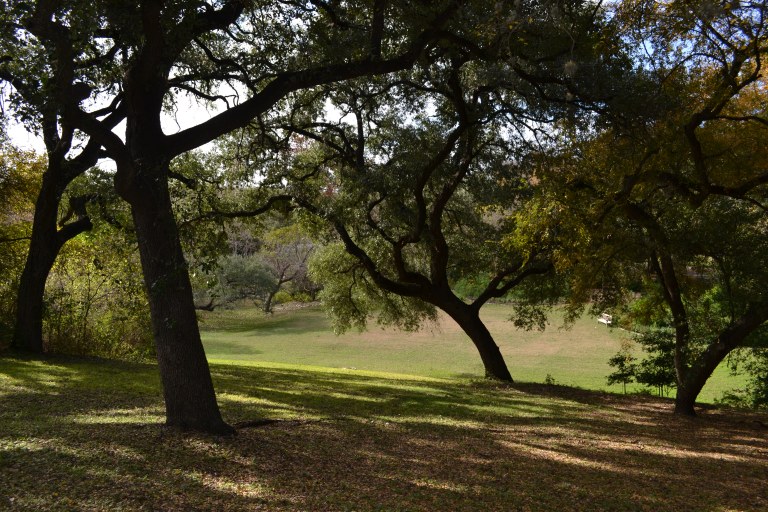
Two offerings from The Wisdom Years – a fall Quiet Day and an Advent book study – will draw us into the bounties and blessings of nature this fall. Our fall Quiet Day, actually a morning, will offer opportunity to wander the beautiful grounds of Cathedral Park in San Antonio on Nov. 30. Click here for the details.
Our Advent study will embrace daily meditations from the animals using Gayle Boss’s All Creation Waits. We gather on Thursdays Dec. 7, 14, and 21 on Zoom for conversation. Click here for details.
We Belong to Each Other
A child is shot on the streets of Sarajevo. A man leans down to comfort her and to get her to a hospital. She dies anyway. Is she your child? a reporter asks. “No,” says the man. “But aren’t they all our children?”
We all need silence in our lives, but it is not that simple. We also need public life. Spiritual writers in the past have often given the “too-simple impression that God and spiritual depth were only found in silence,” says Fr. Ron Rolheiser “as if the joys of human work, conversation, celebration, family, and community were somehow opposed to spiritual growth.”
“A life of spirit, regardless of the path we choose, begins with a person’s acceptance that they are part of something larger than themselves,” says Mark Nepo in this essay. “We want to know who we really are and to know the truth of our existence and our connection to a living Universe.”
A weekly curated collection of essays, poetry, and reflections for your spiritual journey. From The Wisdom Years.
What could you possibly lose by seeking the peace of another person — by literally making another’s peace your goal? -Hugh Prather, How To Live in the World and Still Be Happy
Two offerings from The Wisdom Years – a fall Quiet Day and an Advent book study – will draw us into the bounties and blessings of nature this fall. Our fall Quiet Day, actually a morning, will offer opportunity to wander the beautiful grounds of Cathedral Park in San Antonio on Nov. 30. Click here for the details.
Our Advent study will embrace daily meditations from the animals using Gayle Boss’s All Creation Waits. We gather on Thursdays Dec. 7, 14, and 21 on Zoom for conversation. Click here for details.
Kintsugi: The Golden Joinery of Love
This from a woman who learned how to overcome pain and scars through the ancient Japanese process of repairing broken pottery. It is long but a must-read.
Who does not love the oh-so-lovable Winnie the Pooh? But that gentle, mellow bear also gets scared sometimes. Read the response from his little friend Piglet.
If we live in the northern climates, we can watch – and learn from – the geese as they fly south. But even if we do not see them, we can imagine what Brother Curtis Almquist describes. We see the lesson of encouragement in the sky.
Why is God so elusive? Why doesn’t God just rise up and demonstrate for once and for all that God is good and just and powerful? Why do bad things happen to good people? Why does evil get away with it? Read Fr. Ron Rolheiser’s response.
A weekly curated collection of essays, poetry, and reflections for your spiritual journey. From The Wisdom Years.
When the currents of our life change, drowning us in demands, expectations, and information, that’s when we need something to hold on to that will help us focus and draw back to what is most important in our lives.
-Martin Lonnebo, Pearls of Life For the Personal Spiritual Journey
For Advent, the Wisdom Years community will read All Creation Waits by Gayle Boss. it is a gentle read in which we learn from the animals what it means to wait in darkness for the new creation that is coming to us in the incarnation of God’s self.
It’s a hard time to stay faithful, says Tiffany Clark. it is hard to look with one eye at Christ’s perfect reign in the kingdom of heaven and with the other eye at the mess that comes when humans reject and oppose that kingdom. She offers some suggestions for how to stay faithful and maintain hope.
We operate, says Fr. Ron Rolheiser, too often out of anger, an anger that parades itself as Godly-virtue, as righteousness, as prophecy, as a healthy, divinely-inspired militancy for truth, for cause, for virtue, for God. The prophets operated always out of love, not out of anger.
It takes both the notes and the silence between the notes to make a beautiful piece of music. We remember that Elijah did not find God in the cataclysms of nature but in the silence that followed them. In the silence we realize that God is always with us but we do not always hear it.
A weekly curated collection of essays, poetry, and reflections for your spiritual journey. From The Wisdom Years.
Be the radiator of peace. Go to the center of your inner being and radiate peace in every direction. Our wings may be small but the ripples of the heart are infinite.
Jamil Zaki writes about losing a friendship over differing values but realizes that using empathy can restore relationships. Empathy unites individuals, relationships, and teams, says Zaki, but it also can be very fragile. Fortunately there are ways to reignite it.
“Sometimes the very thing that breaks your heart is also the thing that opens it to warmth and gratitude,” says Ron Rolheiser in this essay about dying. This happens in death, says Fr. Ron. “Our task, in the end, is to do what this man did, die in such a way that our going away is our final gift to those whom we love.”
Jesus shows us the beauty of the downward path, “a path that leads to life and peace and to true greatness,” says Br. David Vryhof of the Society of St. John the Evangelist. Jesus lives a life of humility and teaches us how to do so. Humility is about acknowledging that all we have and all we possess proceeds solely from God’s generous love.
We can spend all of our time and energy obsessing over past mistakes or fearing what the future will bring. But neither of these option is good for us or for our world. Better to live consciously, moment by moment, giving thanks for each day’s gifts.
Richard Rohr reminds us that in times of pain and suffering, the biblical prophets offer hope. “Isaiah says that injustice and evil are not the final reality,” says Rohr. Instead, the final reality is the comfort and compassion of God. “The prophet stands in that place of trust.” We need to remember this in these difficult times.
Here is a great word: Coddiwomple. It means to travel purposefully towards an as-yet-unknown destination. When we are coddiwomplers, we are willing to accept unexpected discoveries along the way.
What is to be our response to a world of hate and killing and suffering? Compassion, says Terry Hershey. “Just assume the answer to every question is compassion.”
In one of the collects from Compline in The Book of Common Prayer, we ask God to “shield the joyous” (pg 134). Joanna Seibert reflects on the joyous people she finds throughout her life, especially those at the church food pantry.
Each time we choose something, we eliminate other choices, says Fr. Ron Rolheiser. That is why we struggle so painfully to make clear choices. We want the right things, but we want other things too.
Tomorrow, Oct. 4, is the day we especially remember and give thanks for St. Francis of Assisi. In his sermon on joy for the day, Br. Geoffrey Tristram recalls visiting the town of Assisi in Italy and offers three suggestions for connecting with joy in our lives.
Growing older, says Alice Fryling, is a moving target. Some days we appreciate the ability to spend more time in quiet and less time rushing. Other things, like loss of energy, we don’t welcome. Fryling finds comfort and direction in the words and actions of Jesus.
“When we were children, we used to think that when we were grown-up we would no longer be vulnerable. But to grow up is to accept vulnerability. To be alive is to be vulnerable,” said Madeleine L’Engle. And often, adds Terry Hershey, we are not comfortable in our own skin.
We think we should be doing more. Our offering to God of our time and energy is too paltry to have significance, we think. Fred Smith reminds us that God has set us in a certain place for a certain task, and no matter how big or small it is, it is enough.
When our lives revolve around problem-solving, fixing, explaining, and taking sides with winners and losers, it can be a pretty circular and even nonsensical existence, says Richard Rohr. But we have come to accept it as normal. To escape the craziness, Rohr says we must find sacred space, which he calls liminal space.
It can be just a little thing that changes your mood – suddenly coming across your favorite flower in bloom or an unexpected kindness shown you that makes the world seem a little brighter. Brother David Steindl-Rast observes that a change in attitude changes the way we see the world, and this in turn changes the way we act.
The woman came to Jesus begging for his help, and he called her a dog. A dog! But she held firm and convinced Jesus to heal her daughter. Br. James Koester preaches on his favorite gospel story. No one is outside Jesus’ love.
In an excerpt from his book The Eternal Promise, Thomas Kelly ponders why Chinese landscape paintings seem incomplete to the Western eye. That is because we live crowded lives. “We leave no room for the Infinite,” says Kelly. The beauty and truth of Chinese landscape paintings is in their starkness. “To crowd the canvas full with finite figures… that would be to miss the most important part of the picture.”
To bring your attention to nature is more than thinking about it. There is a being with it. “You sense how deeply it rests in Being – completely at one with what it is and where it is,” says Eckhart Tolle. “In realizing this, you too come to a place of rest deep within yourself.”
A weekly curated collection of essays, poetry, and reflections for your spiritual journey. From The Wisdom Years.
Hold on to what is good, even if it’s a handful of earth. Hold on to what you believe, even if it’s a tree that stands by itself. Hold on to what you must do, even if it’s a long way from here. Hold on to your life, even if it’s easier to let go. Hold on to my hand, even if someday I’ll be gone away from you.
Thich Nhat Hanh introduced the concept of mindfulness in his home country of Vietnam and the entire world. His inspiration was his experience of war in his own young life in Vietnam. “A Cloud Never Dies” tells the story of this humble young Vietnamese monk and poet whose wisdom and compassion were forged in the suffering of war.
For Native Americans, interrupting someone who is talking is seen as bad manners or even stupidity. “People should regard their words as seeds says Ella Cara Deloria, a Yankton Dakota educator. “They should sow them, and then allow them to grow in silence.”
The Eight Kinds of Humility to Help You Stay Grounded
Most cultures value humility as a virtue to be emulated. Humility teaches us to see that there is always more to learn and different perspectives to be considered. This articles offers eight different varieties of humility to think about and learn from.
Writer Andrea Gibson confesses that “what we are truly craving can only be found with gratitude, and what taught me to be grateful was not what’s sweet about this life, but what’s sour.”
What response is there to God’s staggering generosity in the act of creation? What do we give back to the one who gave us everything? “We give thanks. We bow in honor. We dare to draw near — boldly, because permission has been granted, and trembling because God is infinite personal energy and only fools approach that lightly,” says Brian Morykon of Renovare.



































 The Wisdom Years