Gathered Wisdom is taking a Holy Week break. We pray for you a blessed Holy Week and joyous Easter.
I won’t leave you like orphans. I will come back to you. In a little while the people of this world won’t be able to see me, but you will see me. And because I live, you will live. Then you will know I am one with the Father. You will know you are one with me, and I am one with you (John 14:18-20 CEV).
Gathered Wisdom is an offering of The Wisdom Years, a ministry devoted to the spiritual journey of the last third of our lives.
If this post was forwarded to you, sign up to receive Gathered Wisdom in your email by subscribing at wisdomyears.org.
Author Adrienne Maree Brown is a fan of mushrooms and dandelions because they are both so resilient. Humans are like that when they are engaging out of love. Perhaps humans’ core function is love, says Brown.
Peace is our starting point in life, not its goal. “Peace is our rock of stability when all is in chaos and mountains slip into the sea,” says Bob Holmes. “Peace is the Christ energy in our hearts that holds all things together, connecting us into this Christ soaked universe at its quantum energetic source.”
Jesus tells us to ask, search, and knock in the Gospel of Matthew (7:7-8). But what if we ask and receive nothing, or search and don’t find, or knock and the door remains closed. Asking, searching, and knocking bring us to a vulnerable stance, and vulnerability is the experience of uncertainty.
“For all of us,” says Fr. Ron Rolheiser, “there are times in life when we seem to lose hope, when we look at the world or at ourselves and, consciously or unconsciously, think: ‘It’s too late! This has gone too far! Nothing can redeem this! All the chances to change this have been used up! It’s hopeless!’”
God is never absent. Never, ever, ever. We need to remind ourselves about this every day, every moment. We are never alone. The vastness of God’s presence and love is more incredible than we can know, feel, or imagine.
A weekly curated collection of essays, poetry, and reflections for your spiritual journey. From The Wisdom Years.
Gather up whatever has tumbled in the waves… It all comes down to this: In our imperfect world, we are meant to repair and stitch together what beauty there is…
The cigar store manager took a photo of the store every day. To the casual observer, they all looked the same. You had to slow down and look deeply to see the differences. That’s what spiritual literacy is like.
Quaker spirituality has a phrase for discernment – “as way opens.” It means paying attention to which path feels right and which one is filled with obstacles. When a decision has to be made, even with a deadline looming, there must still be a pause, a way of checking in with our heart and our own deep knowing.
On average, 90,000 Christians are martyred every decade. While few of us will be called to die physically for Christ, all of us will be given the opportunity to be Christ’s witnesses. To do that, says Brother Curtis Almquist, something will have to die.
You know that little indentation just below your nose and above your mouth? Some say that’s where God kissed you before you were born. Once we knew perfect oneness, perfect truth, perfect goodness, and perfect beauty. We long to know them again.
A weekly curated collection of essays, poetry, and reflections for your spiritual journey. From The Wisdom Years.
Words may help, and silence may help, but the one thing that is needed is that the heart should turn to its Maker as the needle turns to the pole. For this, we must be still.
Before we check our email, before we watch the news or plan our day, go out into the garden, says Richard Rohr. There we will find what is real. “If we can find a way to be present to the ‘givens,’ especially the natural ‘givens,’ I believe we can be happy,” says Rohr.
Is it necessary to sit in the ashes of Lent? Some theologians say yes. In this and other mythical images, Fr. Ron Rolheiser gives us an explanation of aspects of Lent.
We can choose to give away our last dollar. Or not. If you take the dollar from your pocket, says Terry Hershey, you open yourself to change. It will require action and the acceptance of any consequences of that choice. However, the music you make will be life-giving to anyone around you.
For what do you hunger? Can you even name it? Peace, yes, and freedom from fear. Safety for our children. A sense of spiritual well-being. And yet, our very daily practices undermine what we claim as our desires. The Wisdom Years Lenten study on our website asks us to give up not just material goods but spiritual illnesses such as needing to be in control and rushing through life.
The study is designed for small groups and individuals. Do on your own or join our Zoom gatherings on Thursday afternoons.
A weekly curated collection of essays, poetry, and reflections for your spiritual journey. From The Wisdom Years.
Healing may not be so much about getting better, as about letting go of everything that isn’t you.
-Rachel Naomi Remen, Kitchen Table Wisdom, Stories That Heal
Feeling Lost? Here Are Four Steps to Finding Your Path
No matter our age, checking in with ourselves to see if we are living our values adds meaning and purpose to life. Here are some research-tested ways to figure out a way forward when we get derailed.
“We are living through the breakdown and breaking open of much that has defined modern life,” says Cameron Timble, a pilot and pastor. It’s time to loosen our grip.
Terry Hershey quotes Joseph Campbell: we all must “have a room, or a certain hour (or so) a day, where you don’t know what was in the newspapers that morning, you don’t know what you owe anybody, you don’t know what anybody owes to you. If you have a sacred place and use it, something eventually will happen.”
Abide has a “gutsy quality” to it, says Br. Luke Ditewig. “Abide also means to remain or to stick with through challenge. Jesus says: ‘the Father stuck with me. I’ll stick with you no matter what. Abide in my love,’ Jesus says. ‘Remain with me.’ ”
Do we always have to open the door to let Christ in? Is the doorknob on the inside or on the outside? In John’s gospel, Christ goes to the huddled disciples after the resurrection and walks through the door. What does that teach us?
A weekly curated collection of essays, poetry, and reflections for your spiritual journey. From The Wisdom Years.
This Lent, God’s invitation is to join in the great work of mending. That’s what redemption means: mending something that is torn or broken. Each one of us is called to share with God in mending that which is broken: our relationship with God, our relationship with one another, our relationship with our broken planet.
“Deep communion and dear compassion are formed much more by shared pain than by shared pleasure,” says Richard Rohr. Our wounds make sacred medicine. We must allow ourselves to be reclaimed by something deeper than the pain before us.
For Lent, Terry Hershey plans to honor a soft heart and make choices that spill from a soft heart. As Etty Hillesum said, “Ultimately, we have just one moral duty. To reclaim large areas of peace in ourselves, more and more peace, and to reflect it towards others.”
The Sea of Galilee is a large fresh-water lake in northern Israel/Palestine that is prone to sudden and violent storms. This must be what happened to Jesus and the Disciples in the biblical story about Jesus calming the storm (Luke8:22–25) We also are afraid for our lives, with good reason, but Jesus assures us not to fear.
“Holiness is not an achievement; it is a grace,” says Anthony De Mello. It is only our nonjudgmental awareness that heals and changes and makes us grow. But in its own way and at its own time.
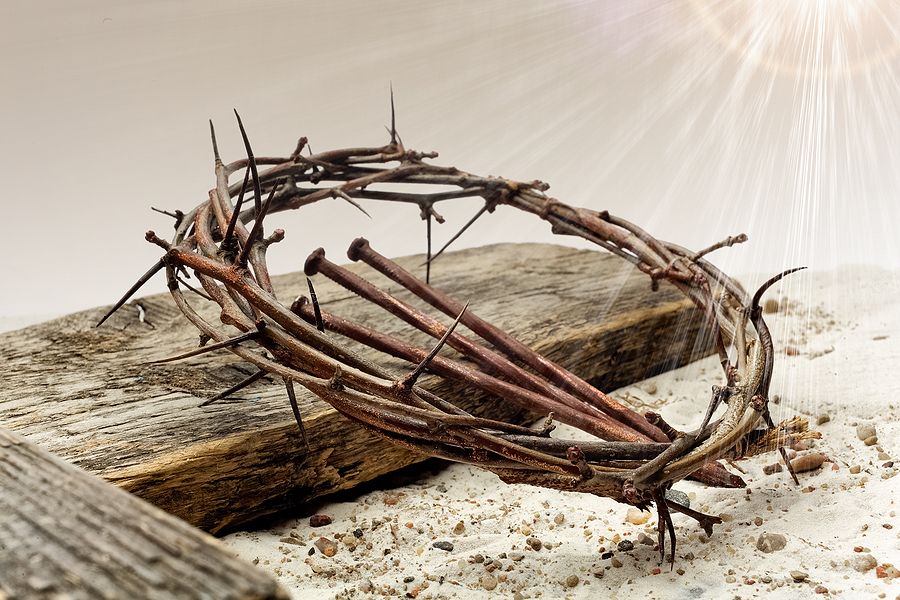
What is the symbolism of the ashes put on our foreheads on Ash Wednesday? “Smudging oneself with ashes says that this is not a season of celebration for you, that some important work is going on inside you, and that you are, metaphorically and really, in the cinders of a dead fire, waiting for something fuller in your life,” says Fr. Ron Rolheiser.
A weekly curated collection of essays, poetry, and reflections for your spiritual journey. From The Wisdom Years.
Let there be an opening into the quiet that lies beneath the chaos where you find the peace you did not think possible and see what shimmers beneath the storm
-Jan Richardson, The Cure for Sorrow: A Book of Blessings
Watching, Waiting, Working for Jesus
As Bro. Curtis Almquist reminds us, “Lent is upon us.” Ash Wednesday is tomorrow. We remember the time Jesus spent in the wilderness before he began his public ministry. It was a time for Jesus “to re-align himself to why God had given him life: to claim the right purpose, the right power, the right voice God had given him.” The focus of Lent, says Bro. Almquist, “can create space anew for the light, and life, and love to Jesus to teem in us and through us to our desperately broken world. Lent is to help us.”
Ilia Delio sees love as a fire of transformation. God’s fire, she says, “is destructive because it can swiftly eliminate all self-illusions, grandiose ideas, ego-inflation, and self-centeredness.” God’s fire will forge us into an ever-radiant new presence of God because God is forever being born within us.
God is not against people having wealth – of money or talent or strength. The problem is that our wealth makes us think that we are self-sufficient, that we don’t need God. Jesus told us to be like little children because they understand that they need help.
Were the desert mothers and fathers just a set of cranky, people-hating monastics? Or did they really give up all they had and move into caves the better to love God?
Benedict cautions us to “listen with the ear of your heart.” This is the call to the spiritual life, says Deacon Joanna Seibert. It is a way to live in the world still connected to God. “First, we are to listen and pay attention. We are to use the ear of our hearts. We are to connect to something outside ourselves, hearing and loving. We hear and learn about love in a community outside of ourselves.”
His parents told him he could buy whatever he wanted with his newspaper income, but when he bought a conga drum for twenty dollars, his father made him take it back. It was a memory that never left him.
What did her father do in an emergency, she was asked. You mean like the time the young man held them at knife-point while they were driving on the Big Sur coastline in California? That emergency? He was curious.
“The more you think you need to accumulate, the bigger fence you need to build around yourself and the fewer people you will trust and let into your life,” says Gareth Higgins, writing in Center for Action and Contemplation. “It’s the inverse of what it means to live in true peace and security, which only comes in the context of relationship with people you can trust.”
For what do you hunger? Can you even name it? Peace, yes, and freedom from fear. Safety for our children. A sense of spiritual well-being. And yet, our very daily practices undermine what we claim as our desires. Join the Wisdom Years community for a Lenten fast that invites us to lay down the old patterns and habits that deplete us and obstruct our full access to the divine image into which we were created.
Our study is from Feb 15 to March 21. We will meet weekly on Zoom for conversation, or you can use the material on you own.
Many good, healthy Christians speak of the “dark night of the soul,” a time when one feels completely bereft of God. It is a time when, as Fr. Ron Rolheiser puts it, “All the former ways you understood, imagined, and felt about things, especially as this relates to God, faith, and prayer, no longer work for you.”
A weekly curated collection of essays, poetry, and reflections for your spiritual journey. From The Wisdom Years.
May you arise each day with a voice of blessing whispering in your heart.
-John O’Donohue, “For Belonging,” To Bless the Space Between Us
A Lenten Fast to Live By
For what do you hunger? Can you even name it? Peace, yes, and freedom from fear. Safety for our children. A sense of spiritual well-being. And yet, our very daily practices undermine what we claim as our desires. Join the Wisdom Years community for a Lenten fast that invites us to lay down the old patterns and habits that deplete us and obstruct our full access to the divine image into which we were created.
Our study is from Feb 15 to March 21. We will meet weekly on Zoom for conversation, or you can use the material on you own.
Your vocation, your calling in life, what you are to be now, will come out of your greatest strength and your greatest need, says Brother Curtis Almquist in this reflection on vocation. “When we are younger,” says Bro. Almquist, “our vocation – our calling – is more about what we are to do. When we are older, our vocation – our calling – is more about what we are to be.”
Like Christmas decor at Walmart, the U.S. presidential election season arrives earlier and louder every time around, says Brian Morykon, director of communications for Renovare. Unlike Christmas, the election season—and politics in general—seems to many of us to have little redeeming value. To help us bring the presence of God into our lives in this election season, Renovare offers this prayer for the election season.
Henri Nouwen once wrote, “The great challenge is living your wounds through instead of thinking them through.” The choice we face in grieving, says Fr. Ron Rolheiser, is whether we are taking our hurts to our head or to our heart. “You need to let your wounds go down into your heart. Then you can live them through and discover that they will not destroy you.”
No place on earth is silent any more, says acoustic ecologist Gordon Hempton. And yet the silence of the natural world connects us back to the land in a way that nurtures and enchants us. Hempton says in silence he disappears.
Like the hen who wanted to love and protect her chicks, says Barbara Brown Taylor in this classic essay, Jesus wanted to gather Jerusalem to himself (Matt 23:37). But they would not come. If you have ever loved someone you could not protect, you will understand.
The path to Christian unity, says Fr. Ron Rolheiser, does not consist in proving only one denomination is correct and trying to convert others to that point of view. Rather, it lies in “each of us living the Gospel more faithfully so as to grow closer to each other in Christ.”
She thought it was going to be the best year of her life. Then she discovered how liberating life can actually be when we welcome its imperfections. Imperfection, she says, is not a goal; it’s more of a truth.
An attitude of scarcity says there is only just so much – food, money, power – to go around and when you win, I lose. An attitude of abundance says there is plenty for all when we share. When you win, I also win.


































 The Wisdom Years